I’ve been to the Royal Observatory in Greenwich four times over ten years. The first time, I paid for the wrong ticket, stood in the wrong queue for an hour, and left thinking it was just a line on the ground and some old telescopes. It’s not. But if you don’t plan it right, you’ll miss what actually makes this place worth the trip up that hill.
Why Most People Waste Their Visit (And How to Fix It)
The Royal Observatory sits on a hill in Greenwich Park. You walk up, you see the view of Canary Wharf, you take a photo of the red time ball, and then you queue for 20 minutes to stand on the Prime Meridian line. That’s what 90% of visitors do. They never go inside the actual buildings.
Here’s what you’re actually missing: Flamsteed House, the original 1675 building designed by Christopher Wren. Inside, you’ll find the Shepherd Gate Clock — the first clock to show Greenwich Mean Time publicly. The mechanism is still running. You can see the Harrison marine chronometers (H1, H2, H3, H4) that solved the longitude problem. That’s the real story — not just a line on the ground.
The mistake most people make: they buy the “General Admission” ticket (about £16 online) which only gets you into the Meridian Courtyard and the small exhibition. To see Flamsteed House and the chronometers, you need the “Royal Observatory + Planetarium” ticket (£24 online) or just the “Royal Observatory” ticket (£18). The difference is £6. Worth every penny.
Failure mode #1: Arriving after 2pm on a weekend. The crowds peak between 11am and 3pm. Go when the gates open at 10am, or after 3:30pm when the tour groups leave.
Failure mode #2: Skipping the audio guide. It’s £5 extra but explains the longitude story in a way the plaques don’t. Without it, you’re just looking at old clocks.
What’s Actually Inside the Observatory (Room by Room)
The Observatory isn’t one big hall. It’s a series of small rooms and galleries. Here’s what you’ll find, in order, if you follow the route properly.
Flamsteed House – The Octagon Room
This is the original building. The Octagon Room was designed for astronomical observations. The ceiling is 9 meters high. The room has three large windows that originally faced the river. You can see the original 1675 wooden floor and the wall-mounted telescopes. Spend 10 minutes here. The audio guide points out the marks on the walls where the original instruments were mounted.
The Longitude Galleries
This is the main exhibition space. Four rooms covering the story of how sailors figured out their position at sea. The key objects:
- John Harrison’s H4 watch – a pocket watch from 1759 that solved the longitude problem. It’s 13 cm in diameter and accurate to within 5 seconds over a transatlantic voyage. You can see the movement through the glass.
- H1, H2, H3 – Harrison’s earlier prototypes. H1 weighs 35 kg. H3 is half that size. They’re on display in glass cases. You can see the brass and steel mechanisms.
- The Board of Longitude archive – original documents, including the Act of Parliament that offered £20,000 for a solution.
The galleries are small. You can walk through in 20 minutes if you’re reading everything. I’d budget 45 minutes with the audio guide.
The Great Equatorial Telescope
This is the massive dome you see from the park. The telescope inside is a 28-inch refractor, built in 1893. It’s the largest of its kind in the UK. The dome rotates on a track. You can go inside the dome and see the telescope up close. The ticket includes a 15-minute demonstration where they show you how the dome moves. It’s loud. The gears make a grinding sound. That’s part of the experience.
Verdict: If you’re not into telescopes, skip the demonstration. The dome is worth seeing for the engineering, but the actual viewing through the telescope is limited to scheduled evening events.
How to Get the Best Photo of the Prime Meridian (Without the Queue)
The Prime Meridian line is in the courtyard. There’s a brass strip on the ground with longitude marks. Tourists line up for a photo straddling the line, one foot in each hemisphere. The queue can be 10–20 minutes on a busy day.
Here’s the trick: go to the wall at the back of the courtyard. There’s a vertical metal strip marking the meridian on the wall. Almost nobody queues for that. You get the same photo without waiting. Or, walk 50 meters down the hill to the park path — there’s a second meridian line embedded in the pavement. Free. No queue. Same accuracy.
The red time ball on the roof drops at exactly 1pm every day. It’s been doing that since 1833. If you’re in the courtyard at 12:55, you’ll see it. Stand near the entrance to Flamsteed House for the best view. The ball is 1.5 meters in diameter and drops 5 meters in 10 seconds.
The Hidden Gem: The Peter Harrison Planetarium
Most people skip the planetarium. It’s in a separate building at the bottom of the hill, right next to the National Maritime Museum. The dome is 12 meters in diameter. The shows run every 30–60 minutes, depending on the day.
What’s good: The live presenter shows. They use the dome to show the current night sky over London. The presenter points out visible planets, star clusters, and the International Space Station if it’s passing overhead. The show lasts 30 minutes. Tickets are £10 for adults, or included in the combined ticket (£24).
What’s not good: The pre-recorded shows. “We Are Stars” is aimed at kids under 10. “The Sky Tonight” is the only one worth your time if you’re an adult. Check the schedule before you buy.
Verdict: If you’re visiting with kids, the planetarium is worth the extra walk. If you’re solo or with adults, skip it unless you’re into astronomy. The Observatory itself has more to offer.
Practical Stuff: Tickets, Timing, and What to Skip
| Ticket Type | Price (online) | What You Get | Worth It? |
|---|---|---|---|
| General Admission | £16 | Meridian Courtyard, small exhibition, courtyard | No — skip this |
| Royal Observatory | £18 | Flamsteed House, Longitude Galleries, Great Equatorial Telescope | Yes — this is the one |
| Royal Observatory + Planetarium | £24 | All of the above + one planetarium show | Yes — if you want the planetarium |
| Combined with Cutty Sark | £28 | Observatory + Cutty Sark (valid 7 days) | Yes — if you’re doing both in one trip |
Timing: The Observatory opens at 10am. Last entry is 4:30pm (winter) or 5:30pm (summer). Allow 2–3 hours for the full visit. If you’re short on time, skip the planetarium and spend the time in the Longitude Galleries.
What to skip entirely: The gift shop. It’s overpriced. The same items are available at the National Maritime Museum gift shop downstairs for the same price or less. Also skip the café at the top of the hill — £5 for a mediocre tea. Walk down to the Cutty Sark area for better options.
Getting there: From central London, take the DLR from Bank to Cutty Sark (20 minutes) or the Jubilee line to North Greenwich then the 129 bus (30 minutes). The walk up the hill from Cutty Sark station is 15 minutes, steep. There’s a shuttle bus from the station to the Observatory, runs every 15 minutes, costs £2.
When You Shouldn’t Go to the Royal Observatory
I’ll be honest: the Royal Observatory isn’t for everyone. If you’re not interested in clocks, navigation, or the history of science, you’ll find it underwhelming. The courtyard and the view are free — you can see them from the park without buying a ticket. The buildings inside are small. The exhibitions are dense with text. Kids under 8 will get bored fast.
Alternatives that might suit you better:
- The National Maritime Museum (free) – bigger, more interactive, great for families. Has the actual coat Nelson wore at Trafalgar.
- The Cutty Sark (£18) – the tea clipper ship. You can walk under the hull, see the cargo holds. More visual, less reading.
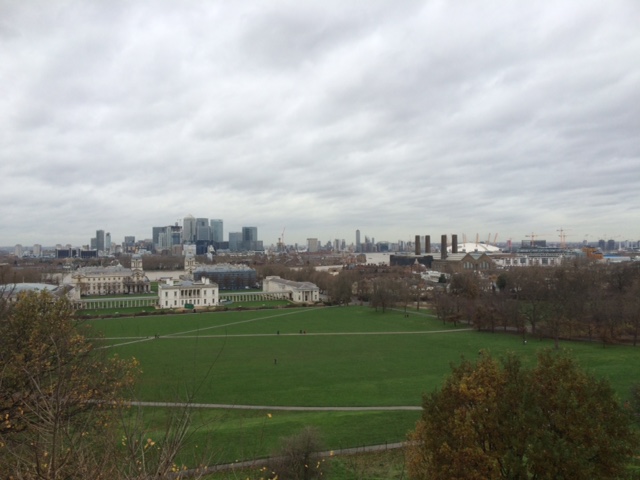
- Greenwich Park itself – free. The view from the top of the hill is one of the best in London. You can see the O2, Canary Wharf, and the river. Bring a picnic.
If you’re coming to London for 3 days or less, skip the Observatory. Spend that time at the British Museum or the Tower of London. The Observatory is a half-day trip from central London, and it’s not worth the commute if you’re pressed for time. Save it for a return visit.
The Royal Observatory is a place for people who want to understand how we figured out where we are. It’s not flashy. It’s not Instagram-friendly beyond that one line on the ground. But if you take the time to read the story of Harrison’s clocks, you’ll walk away with a real appreciation for what it took to map the world. That’s worth the ticket price.